Ryzen 2600 vs 2600X – Check Which One Is Best & Why?

Ryzen 5 2600X & Ryzen 5 2600 share many similarities, but there are also important differences, such as quality, performance, features, design, and connectivity. If you want the best one between them, I Would recommend the Ryzen 5 2600X than the Ryzen 5 2600. 
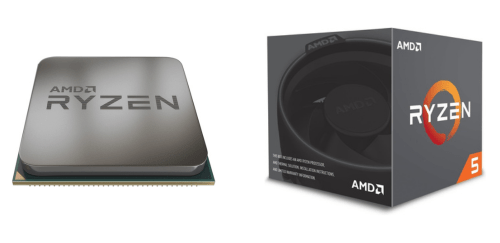
Why Do I Recommend The Ryzen 5 2600X

  • The AMD Ryzen 5 2600X has a 3.6 GHz base clock for higher sustained processing speeds during heavy multitasking workloads, while the AMD Ryzen 5 2600 has a 3.4 GHz base clock.
  • AMD Ryzen 5 2600X features a 4.2 GHz max boost clock for stronger single-threaded performance in gaming and lightly threaded applications, whereas the AMD Ryzen 5 2600 has a 3.9 GHz max boost clock.
  • It comes with a 95W TDP configuration for maintaining higher turbo frequencies under prolonged load conditions, while the AMD Ryzen 5 2600 has a 65W TDP.
  • The AMD Ryzen 5 2600X includes a 142W PPT limit for allowing higher sustained package power during demanding CPU tasks, while the AMD Ryzen 5 2600 supports an 88W PPT limit.
  • AMD Ryzen 5 2600X features higher default Precision Boost 2 power and current thresholds for maintaining elevated clock speeds across multiple cores under dynamic workloads, whereas the AMD Ryzen 5 2600 uses lower boost thresholds.
  • It comes with the Wraith Spire cooler for improved thermal dissipation during stock operation, while the AMD Ryzen 5 2600 comes with the Wraith Stealth cooler.
  • The AMD Ryzen 5 2600X includes a 92 mm stock cooler fan for moving greater airflow across the heatsink under load, while the AMD Ryzen 5 2600 includes an 80 mm fan.
  • AMD Ryzen 5 2600X features higher factory voltage and binning parameters for achieving stronger out-of-the-box multi-core performance without manual tuning, whereas the AMD Ryzen 5 2600 uses more conservative stock voltage settings.

Maybe the Ryzen 5 2600 price can make you comfortable because it’s a little bit cheaper than the Ryzen 5 2600X. But you have to compromise all the above-mentioned features. Now the Decision is Yours. I hope it was helpful to choose the right one.

Side By Side Comparison

FeatureRyzen 5 2600XRyzen 5 2600
Base Clock3.6 GHz3.4 GHz
Max Boost Clock4.2 GHz3.9 GHz
TDP (Thermal Design Power)95 W65 W
PPT (Package Power Tracking) Limit142 W88 W
TDC (Thermal Design Current)95 A72 A
EDC (Electrical Design Current)140 A110 A
CPU SKU Bin Target2600X Bin2600 Bin
Default Core Voltage RangeHigher factory voltagesLower factory voltages
Precision Boost 2 Frequency FloorHigher floor limitsLower floor limits
XFR (Extended Frequency Range) CeilingXFR2 limits higherXFR2 limits lower
Included Cooler ModelWraith SpireWraith Stealth
Cooler Fan Diameter92 mm80 mm
Cooler Copper Core PlateYesNo
Average All-Core Stock Frequency~4.0 GHz~3.8 GHz
Sustained Power at Auto Settings~125 W~85 W
PriceCheck Ryzen 5 2600X PriceCheck Ryzen 5 2600 Price

What Common Both Can Do?

  • Architecture: Both processors are built on the Zen+ architecture using a 12nm process. This means they share the same core design, IPC characteristics, and overall platform behavior.
  • Core Count: Each CPU includes 6 physical cores. This configuration supports modern gaming and multitasking workloads effectively.
  • Thread Count: Both models support 12 threads via simultaneous multithreading. This improves performance in productivity tasks such as rendering and encoding.
  • Socket: Both processors use the AM4 socket. This allows compatibility with a wide range of AMD motherboards across multiple chipset generations.
  • L3 Cache: Each CPU features 16 MB of shared L3 cache. This helps reduce memory latency and improves data access efficiency.
  • L2 Cache: Both processors include 3 MB of total L2 cache. This supports faster communication between cores and frequently accessed data.
  • L1 Cache: Each model includes 576 KB of L1 cache. This provides rapid access to critical instructions and data.
  • PCIe Version: Both CPUs support PCIe 3.0. This enables compatibility with modern graphics cards and NVMe SSDs.
  • PCIe Lanes: Each processor provides 20 PCIe lanes from the CPU. This supports a primary GPU slot and additional high-speed storage.
  • Memory Type: Both processors use DDR4 memory. This ensures compatibility with standard desktop RAM configurations.
  • Max Memory Channels: Each supports dual-channel memory configuration. This allows improved memory bandwidth compared to single-channel setups.
  • Unlocked Multiplier: Both CPUs feature unlocked multipliers. This enables manual overclocking on compatible motherboards.
  • Integrated Graphics: Neither processor includes integrated graphics. A discrete GPU is required for display output.
  • Manufacturing Process: Both are produced using 12nm FinFET fabrication. This process balances efficiency and performance for mid-range desktop CPUs.
  • Instruction Set Support: Each supports SSE4.2, AVX2, and FMA3 instruction sets. This ensures compatibility with modern software and optimized workloads.
  • Thermal Limit: Both CPUs share a maximum operating temperature of 95°C. This defines the thermal ceiling before throttling mechanisms activate.
  • Default Memory Support: Each officially supports DDR4 memory up to 2933 MT/s. This determines baseline memory compatibility without overclocking.
  • Platform Compatibility: Both processors are compatible with AMD 300, 400, and many 500 series chipsets via BIOS updates. This provides flexibility for system upgrades and reuse of existing hardware.

Common Features

FeatureRyzen 5 2600XRyzen 5 2600
ArchitectureZen+ (12nm)Zen+ (12nm)
Core Count6 Cores6 Cores
Thread Count12 Threads12 Threads
SocketAM4AM4
L3 Cache16 MB16 MB
L2 Cache3 MB3 MB
L1 Cache576 KB576 KB
PCIe VersionPCIe 3.0PCIe 3.0
PCIe Lanes20 Lanes20 Lanes
Memory TypeDDR4DDR4
Max Memory ChannelsDual ChannelDual Channel
Unlocked MultiplierYesYes
Integrated GraphicsNoNo
Manufacturing Process12nm FinFET12nm FinFET
Instruction Set SupportSSE4.2, AVX2, FMA3SSE4.2, AVX2, FMA3
Thermal Limit95°C95°C
Default Memory SupportDDR4-2933DDR4-2933
Platform Compatibility300/400/500 Series Chipsets300/400/500 Series Chipsets
Price Check Ryzen 5 2600X Price Check Ryzen 5 2600 Price

FAQ

Do both processors have the same number of cores and threads?
Yes, both CPUs feature 6 cores and 12 threads using simultaneous multithreading. This makes them equally capable in terms of core count for gaming and multitasking workloads.

Is overclocking supported on both CPUs?
Both Ryzen 5 2600X and Ryzen 5 2600 have unlocked multipliers. This allows manual overclocking on compatible AM4 motherboards with adequate cooling.

Do these processors include integrated graphics?
Neither processor includes integrated graphics. A dedicated graphics card is required for display output in both cases.

Are Ryzen 5 2600X and Ryzen 5 2600 compatible with the same motherboards?
Yes, both use the AM4 socket and are compatible with AMD 300, 400, and many 500 series chipsets with proper BIOS support. This ensures similar upgrade flexibility.

Which CPU runs at a higher clock speed by default?
Ryzen 5 2600X operates at higher base and boost clocks compared to Ryzen 5 2600. This results in stronger stock performance without manual tuning.

Is the cache size different between the two processors?
No, both CPUs have identical cache configurations including 16 MB of L3 cache, 3 MB of L2 cache, and 576 KB of L1 cache. This means memory hierarchy performance is the same at the architectural level.

Do both processors support the same type of memory?
Yes, both support DDR4 memory with official speeds up to DDR4-2933 in dual-channel configuration. Memory compatibility and bandwidth capabilities are identical.

Which processor consumes more power?
Ryzen 5 2600X has a 95W TDP, while Ryzen 5 2600 has a 65W TDP. The higher TDP allows the 2600X to maintain higher boost frequencies under load.

Is the included stock cooler the same?
No, Ryzen 5 2600X comes with the Wraith Spire cooler, while Ryzen 5 2600 includes the Wraith Stealth cooler. The Spire cooler has a larger heatsink and copper core.

Do both processors use the same manufacturing process?
Yes, both are built on AMD’s 12nm Zen+ architecture. This means they share the same core design and IPC characteristics.

Is gaming performance very different between the two?
At stock settings, Ryzen 5 2600X typically achieves slightly higher frame rates due to higher boost clocks. However, when overclocked to similar speeds, the performance gap becomes minimal.

Do both CPUs support PCIe 3.0?
Yes, both processors support PCIe 3.0 with 20 CPU lanes. This allows full compatibility with modern GPUs and NVMe SSDs.

Which CPU is better for lower power builds?
Ryzen 5 2600 is more suitable for lower power or compact builds due to its 65W TDP. It generates less heat at stock settings compared to the 2600X.

Are they suitable for modern productivity workloads?
Both processors handle multitasking, streaming, content creation, and general productivity effectively thanks to their 6-core, 12-thread configuration. Performance differences mainly depend on clock speeds rather than architecture.