RTIC SoftPak 30 & RTIC SoftPak 20 share many similarities, but there are also important differences, such as quality, performance, features, and design. If you want the best one between them, I Would recommend the RTIC SoftPak 30 rather than the RTIC SoftPak 20.
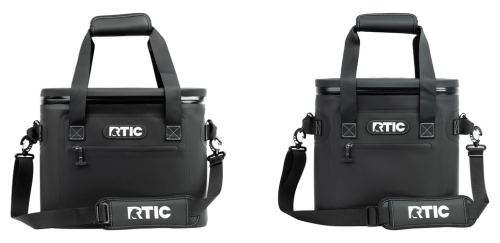
Why Do I Recommend The RTIC SoftPak 30?
- The RTIC SoftPak 30 has a larger 30-can capacity for carrying more drinks, ice, and food for group outings and longer trips, while the RTIC SoftPak 20 has a smaller 20-can capacity.
- RTIC SoftPak 30 features a bigger interior volume to fit tall bottles, stacked containers, and multiple meals without tight packing, whereas the RTIC SoftPak 20 uses a more compact interior space.
- It includes higher ice capacity to maintain colder temperatures for longer periods during extended outdoor use, while the RTIC SoftPak 20 holds less ice.
- The RTIC SoftPak 30 comes with a wider overall footprint for improved internal organization and separation of food and drinks, while the RTIC SoftPak 20 has a narrower footprint that limits layout flexibility.
- RTIC SoftPak 30 supports heavier pack-outs for full-day trips with multiple users, whereas the RTIC SoftPak 20 supports lighter pack-outs better suited for short outings.
- It features larger exterior pocket space to store more accessories like utensils, napkins, and small gear, compared to the RTIC SoftPak 20 has smaller pocket capacity.
- The RTIC SoftPak 30 has greater vertical depth to accommodate bulky food containers and layered ice placement, while the RTIC SoftPak 20 has shallower internal depth.
- RTIC SoftPak 30 comes with longer carry dimensions to distribute weight across a larger packed area for transporting higher loads, whereas the RTIC SoftPak 20 has shorter carry dimensions optimized for lighter loads.
Maybe the RTIC SoftPak 20 can make you comfortable because it’s a little bit cheaper than the RTIC SoftPak 30. But you have to compromise all the above-mentioned features. Now the Decision is Yours. I hope it was helpful to choose the right one.
Side-by-Side Comparison
| Feature | RTIC SoftPak 30 | RTIC SoftPak 20 |
| Can capacity | 30 cans | 20 cans |
| Exterior length | Greater | Smaller |
| Exterior width | Greater | Smaller |
| Exterior height | Greater | Smaller |
| Interior volume | Larger | Smaller |
| Weight (empty) | Heavier | Lighter |
| Maximum packed weight | Higher | Lower |
| Ice capacity | Greater | Lower |
| Strap length | Longer | Shorter |
| Handle size | Larger | Smaller |
| Shoulder strap width | Wider | Narrower |
| Side pocket capacity | Larger | Smaller |
| Top pocket capacity | Larger | Smaller |
| Overall bulk | More | Less |
| Footprint | Larger | Smaller |
| Packed depth | Deeper | Shallower |
| Pack-out space | More | Less |
| Price | Check RTIC SoftPak 30 Price | Check RTIC SoftPak 20 Price |
What Common Both Can Do?
- Soft-sided cooler design: Both models use a soft-sided construction, making them easier to carry and store than hard coolers. This design improves portability while still maintaining effective insulation for daily outings.
- Closed-cell foam insulation: Each cooler uses closed-cell foam insulation to slow heat transfer. This helps maintain cold temperatures for drinks and food during trips, beach days, or outdoor events.
- Leak-resistant zipper: Both coolers include a leak-resistant zipper system that helps prevent melted ice from escaping. This keeps vehicles, floors, and gear dry during transport.
- Waterproof interior liner: The interiors of both models are lined with waterproof materials. This protects the insulation and allows safe use with ice and liquids.
- Sweat-resistant exterior: Both exteriors resist condensation buildup. This helps prevent moisture from soaking nearby items and improves handling comfort.
- Heavy-duty nylon shell: Each cooler uses a durable nylon outer shell designed to withstand outdoor wear. This increases resistance to abrasion, scuffs, and repeated use.
- Reinforced stitching: Reinforced stitching is used on both models to handle heavier loads. This improves long-term durability when the cooler is frequently packed and carried.
- Welded seams: Both coolers feature welded seams that enhance water resistance. This construction reduces weak points where leaks could otherwise occur.
- Padded shoulder strap: Each model includes a padded shoulder strap for carrying comfort. This reduces pressure on the shoulder when the cooler is loaded.
- Carry handles: Both coolers provide built-in carry handles for quick lifting. This makes short moves and loading into vehicles easier.
- Exterior accessory pockets: Each cooler includes exterior pockets for small items like utensils or napkins. These pockets help keep essentials accessible without opening the main compartment.
- Flat, stable base: Both models use a flat base design that allows the cooler to sit upright. This improves stability on sand, grass, or vehicle floors.
- Upright box-style shape: The box-style shape is shared across both coolers. This shape helps with efficient packing of cans, bottles, and food containers.
- Ice retention design: Both coolers are engineered to retain ice for extended periods. This supports longer outdoor use without frequent ice replacement.
- Food-safe interior: The interior materials of both models are food-safe. This allows direct contact with food items without concern.
- Outdoor-use focused build: Both coolers are designed specifically for outdoor environments. This makes them suitable for camping, beach trips, picnics, and tailgating.
- Zipper pull tabs: Each model includes extended zipper pull tabs. These improve usability when opening or closing the cooler, even with wet hands.
- Easy-clean interior: Both interiors are easy to wipe clean after use. This simplifies maintenance after spills or melted ice.
Common Features
| Feature | RTIC SoftPak 30 | RTIC SoftPak 20 |
| Soft-sided cooler design | Yes | Yes |
| Closed-cell foam insulation | Yes | Yes |
| Leak-resistant zipper | Yes | Yes |
| Waterproof interior liner | Yes | Yes |
| Sweat-resistant exterior | Yes | Yes |
| Heavy-duty nylon shell | Yes | Yes |
| Reinforced stitching | Yes | Yes |
| Welded seams | Yes | Yes |
| Padded shoulder strap | Yes | Yes |
| Carry handles | Yes | Yes |
| Exterior accessory pockets | Yes | Yes |
| Flat, stable base | Yes | Yes |
| Upright box-style shape | Yes | Yes |
| Ice retention design | Yes | Yes |
| Food-safe interior | Yes | Yes |
| Outdoor-use focused build | Yes | Yes |
| Zipper pull tabs | Yes | Yes |
| Easy-clean interior | Yes | Yes |
| Price | Check RTIC SoftPak 30 Price | Check RTIC SoftPak 20 Price |
FAQ
Is the RTIC SoftPak 30 larger than the RTIC SoftPak 20? Do both RTIC SoftPak 30 and SoftPak 20 use the same insulation type? Is ice retention performance similar between the two models? Are the zippers the same on both coolers? Do both models support carrying with a shoulder strap? Is there a difference in portability between the two? Are the exterior materials identical on both coolers? Do both coolers have exterior storage pockets? Can both coolers safely store food and drinks together? Are the seams constructed the same way on both versions? Is the base design the same on both models? Do both coolers resist exterior condensation? Are these coolers suitable for outdoor activities like camping and beach trips? Is cleaning and maintenance similar for both models? Do both models use the same overall shape and structure? |